Before you can ask what the cosmological constant is, or what its sign must be, you need to understand the principle Einstein set for himself. He didn’t build general relativity by guessing. He started from relativity and then refused to let the universe smuggle in privileged structure through the back door.
This founding principle already contained the answer about Λ. The demand that the metric determine its own scale is treated here as a consequence of reading relativity precisely, not as a second co-equal postulate.
The Relativity Principle
“The laws of physics take the same form in all inertial frames and at all spacetime points.”
In plain English:
No special place. No special time. No preferred frame of reference. The rules apply equally everywhere and for everyone.
What it prohibits:
Any spacetime that requires information flowing in from a special boundary, a “wall” at the edge of the universe, would violate this principle. The laws would not be the same near the wall as they are in the interior.
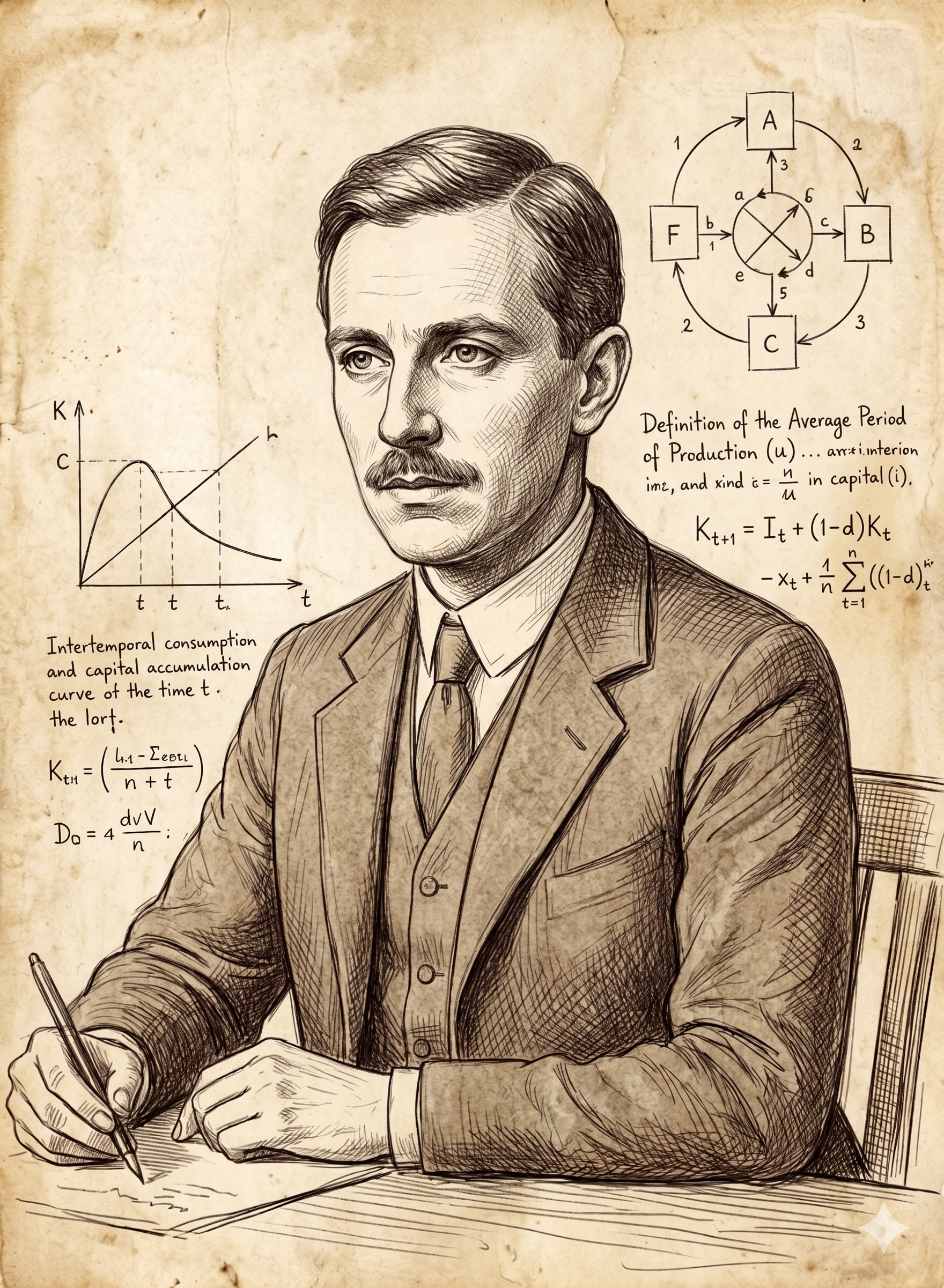
Erich Kretschmann
1887-1973
Historical illustration. This is a reconstruction and interpretation of Erich Kretschmann, not a definitive portrait.
“Every physical theory can be written in generally covariant form.”
Why the Strong Reading Is Necessary
Kretschmann’s 1917 objection showed that mere general covariance cannot be the whole content of Einstein’s principle. If any theory can be rewritten in generally covariant notation, covariance alone does not distinguish general relativity from an externally scaffolded theory.
The principle therefore has to be read substantively: no preferred frame, no external boundary data, and no metric scale supplied from outside the theory. That stronger reading is what turns relativity from a notation into a physical test, and it is the test that eliminates Λ ≤ 0.
A Self-Determined Metric
The metric must emerge from the framework itself.
In plain English:
Read precisely, the principle requires a metric that determines its own scale: the “ruler” of spacetime must come out of the physics itself. You’re not allowed to declare it from outside.
What it prohibits:
Any spacetime whose algebra can determine shape but not scale, and needs an external number plugged in to set the ruler, fails this reading. The metric must be self-determined from within the framework.
The Key Implication
The relativity principle becomes a prohibition once you read it precisely: no external boundary data, and no externally supplied ruler. This is the test that the cosmological constant must pass. It shows that Λ > 0 satisfies both requirements and that Λ ≤ 0 fails at least one.
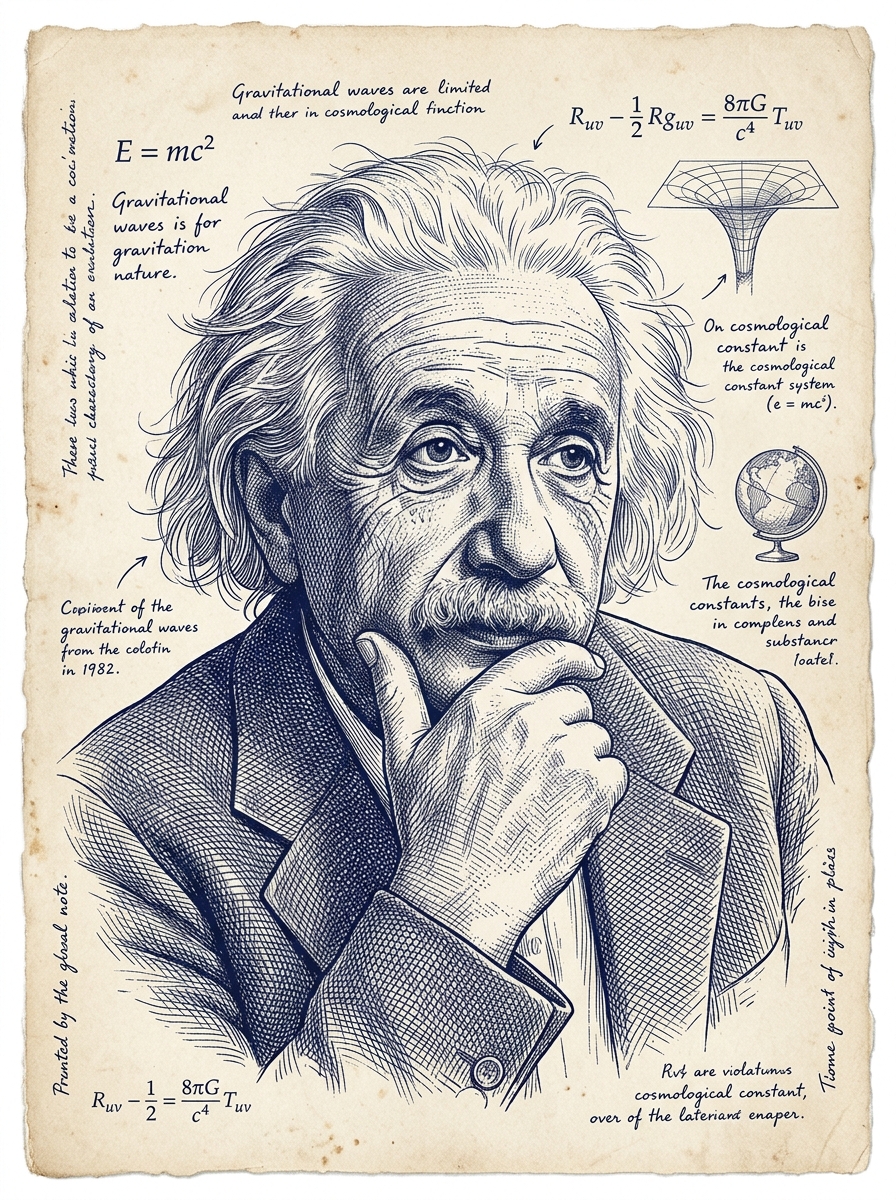
Albert Einstein
“The laws of physics take the same form in all inertial frames and at all spacetime points.”Albert Einstein, relativity principle, 1905
This one principle, read without compromise, narrows the possible universes to exactly three. In the next chapter, we meet all three and watch two of them fail.
Three Universes →